
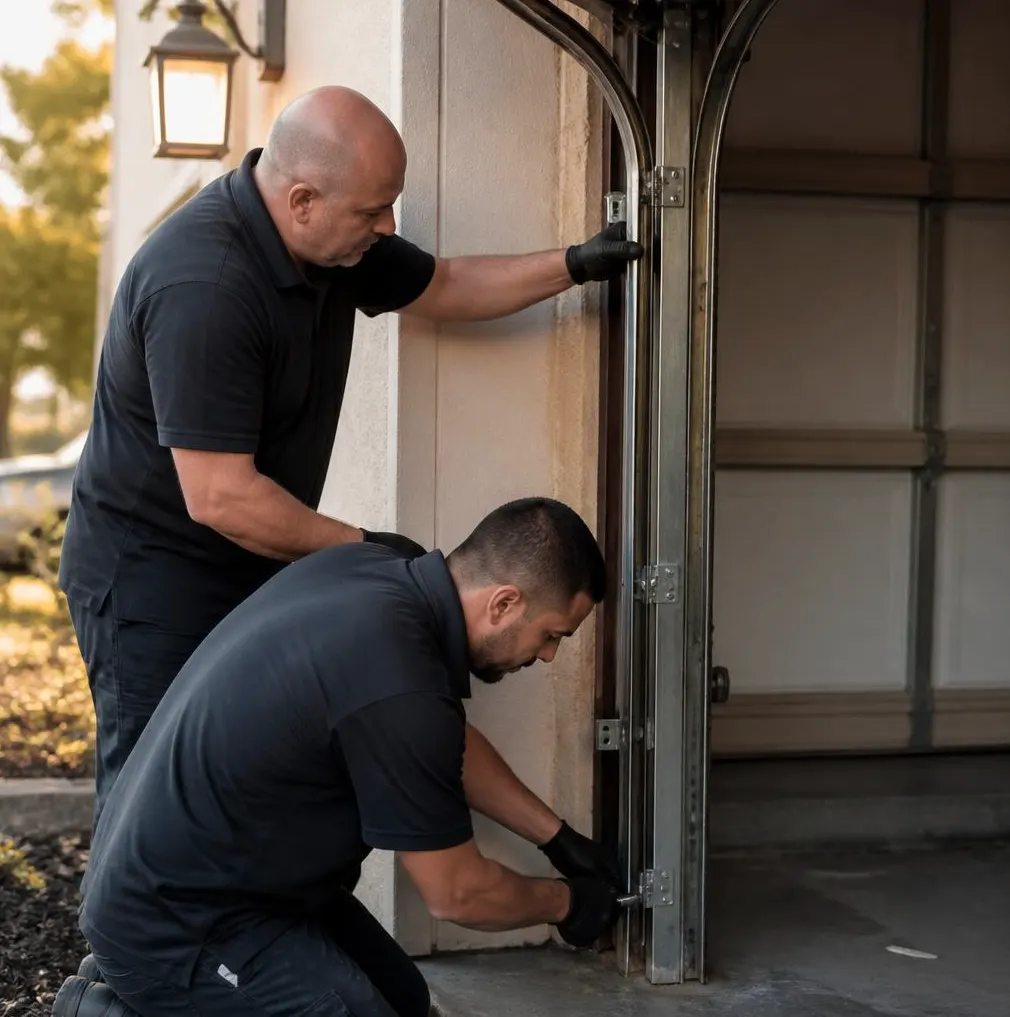
Short answer: most noisy garage door openers get quiet again with cleaning, lubrication, and tightened hardware. If the racket continues after that, the real problem is usually worn rollers, a stretched chain, or an aging opener motor — and the permanent fix is often swapping a chain-drive opener for a belt-drive. Here's how to work through it in order, cheapest and easiest first.
Why Your Opener Got Loud in the First Place
Garage doors in this part of Orange County take a beating from conditions most homeowners don't think about. Coastal salt air corrodes metal rollers, hinges, and springs faster than inland neighborhoods ever see. Dry seasons coat tracks in fine dust that grinds down hardware like sandpaper. And older homes with original chain-drive openers simply get louder as the chain stretches over the years. None of this means something is broken beyond repair — it just means the door needs attention before winter rain season, when a sticking or grinding door becomes a daily annoyance.
Tools You'll Need
- Step ladder
- Socket set and adjustable wrench
- Silicone-based garage door lubricant (not WD-40, which attracts dust)
- Clean rags
- Level
- Work gloves and safety glasses
Step-by-Step: From Cheap Fixes to a Full Belt-Drive Swap
- Watch and listen first. Run the door up and down and note exactly when the noise happens: a grinding sound while rolling usually means dirty or worn rollers; a rattling chain means slack or dirt buildup; a loud bang at the top or bottom often points to loose hardware or a worn stop.
- Tighten every bolt you can reach. Vibration loosens the nuts and bolts on brackets, hinges, and the track over time, especially on doors that get used daily. A quarter-turn with a socket wrench on each one can quiet a surprising amount of rattle.
- Lubricate the moving parts. Apply silicone lubricant to the rollers, hinges, and the opener's rail. Wipe off excess so it doesn't collect dust — important here given how much grit blows around during dry months. Avoid thick grease on nylon rollers; it does more harm than good.
- Check and replace worn rollers. Metal rollers are the loudest culprit in most homes. If yours are pitted, flat-spotted, or more than ten years old, swap them for nylon rollers. This is a reasonable DIY job on most residential doors and typically runs in the $30–$80 range for a full set of parts.
- Inspect the chain or belt tension. A sagging chain-drive opener rail will slap and bang with every cycle. Most openers have a tensioner nut near the motor head that can be adjusted a half-turn at a time until the slack is gone — check your manual, since over-tightening strains the motor.
- Add vibration isolation. A rubber isolator kit between the motor unit and the ceiling bracket absorbs a lot of the hum that travels into the house, particularly useful if the garage shares a wall with a bedroom.
- Consider a belt-drive conversion. If you've done all of the above and the opener is still loud, the chain-drive design itself may be the problem. Rubber belt-drive openers run dramatically quieter and don't stretch or rust the way chains do — a real advantage near the coast where salt air shortens the life of exposed metal hardware. This isn't a simple parts swap; it usually means replacing the entire opener unit, aligning the rail, and setting travel limits and force settings correctly.
- Address spring and cable noise separately. If the noise is a loud bang or pop rather than a grind or hum, that's often a torsion spring issue, not the opener at all. Springs under tension are not a DIY repair — the stored force can cause serious injury.
What a Homeowner Can Handle
Tightening hardware, lubricating tracks and hinges, cleaning rollers, and replacing nylon rollers on a standard residential door are all reasonable weekend projects with basic tools.
What Needs a Technician
Anything involving torsion springs, cables, or a full opener replacement should go to a professional. Springs store enough force to cause serious injury, belt-drive conversions require precise alignment and electrical work, and older homes with earthquake retrofit hardware need that bracing left intact and properly reinstalled if the opener or track is touched.
When to Call Costa Mesa Garage Door
If you've lubricated, tightened, and swapped rollers and the door is still loud — or if the noise is a sudden bang that sounds like metal under stress — it's time to call in a technician. Costa Mesa Garage Door handles both Garage Door Maintenance & Tune-Up visits to catch worn parts before they get loud, and full Garage Door Opener Installation & Repair when a belt-drive upgrade makes more sense than continuing to patch an aging chain-drive unit. A technician will check spring tension, track alignment, and opener force settings as part of the job, not just the noise itself.
If your garage door opener in Costa Mesa or the surrounding area is driving you up the wall, give Costa Mesa Garage Door a call for a straightforward diagnosis and a quiet fix that lasts.